The Japan Robot Association reported 2025 robot orders of ¥1.0456 trillion, up 25.7% year on year, and production of ¥945.3 billion, up 21.0%. Its 2026 forecast raises orders to ¥1.22 trillion and production to ¥1.05 trillion. The figures exclude service robots, so they are best read as an industrial-robot market signal rather than a measure of the entire robotics economy.
The headline is strong, but procurement teams should not treat market growth as proof that every automation project will succeed. JARA also reported weaker 2025 domestic demand from electrical machinery and automobiles. That contrast points to a practical bottleneck: application engineering, safety design, tooling, controls, data integration and operator readiness determine whether installed hardware creates throughput.
For COCON, the useful opportunity is a disciplined system-integration offer for Japan and cross-border manufacturers. Start with one constrained process, record the manual baseline, simulate the cell, define acceptance criteria and plan maintenance before selecting hardware. Robot availability may expand, but scarce integration capacity will continue to separate a demonstration from a dependable production system.
Original sources
- Japan Robot Association — Robot Orders and Production Results for 2025 and Forecast for 2026 ↗ 2026-06-01
Source summaries and application analysis by COCON. Pilot ideas are proposals, not claims of completed COCON projects or confirmed product availability.
Could this work in your operation?
Share your workflow, location and target outcome. Start with a feasibility assessment, then validate the technology and define a pilot.
Discuss your project ↗ Email our team ↗Read next
Physical AI starts with factory data
Japan's physical-AI push makes robot data readiness an operational project before it becomes a model project.
Read insight ↗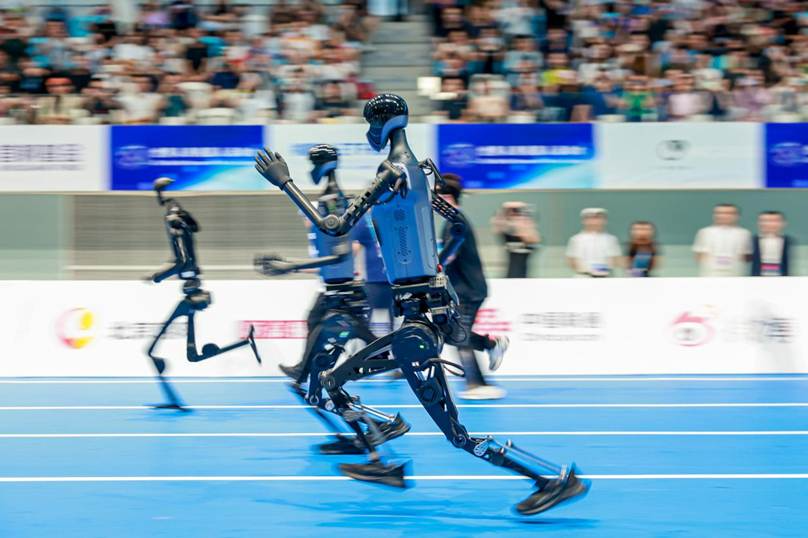
Robot Games 2026: from competition to useful work
What robot competitions reveal—and what a real production task still needs to prove.
Read insight ↗